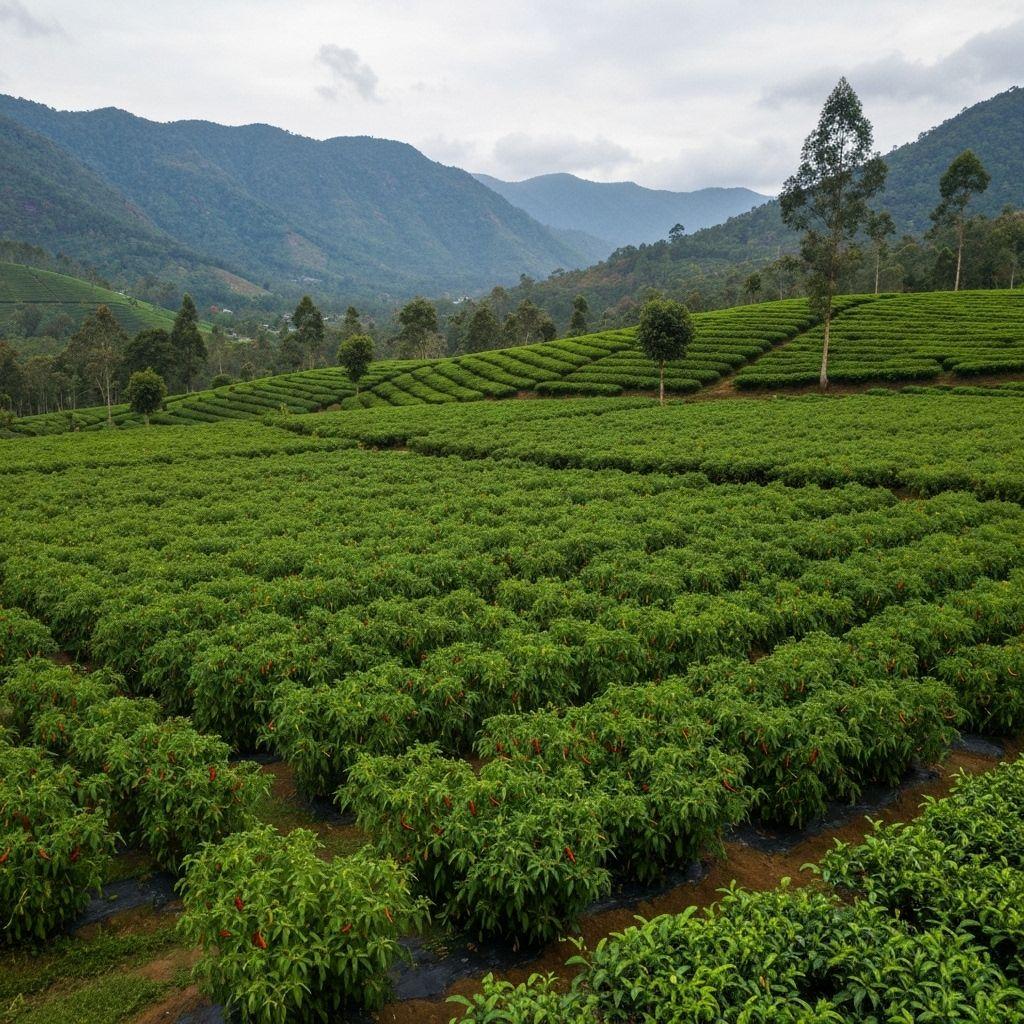
Step inside Sinha Spirit Agro's grading floor to see how each chilli batch is harvested, screened, packed, and documented for export readiness.
Behind the Scenes of Export-Grade Quality
Quality is built into every stage - from field selection to cold-chain dispatch. Our process is documented, auditable, and tuned to global buyer expectations.
Step 1: Harvest Timing
Experienced field teams pick at first light when fruit temperature is lowest and texture is firmest.
- Visual inspection confirms colour, size, and shape for the intended grade.
- Hand harvesting into padded crates protects skin integrity.
- Immediate shade staging prevents sun stress before transport.
Step 2: Initial Sorting
Within hours of arrival, produce moves through a first-stage triage to remove field defects and foreign matter.
- Reject bruised, split, or pest-affected chillies.
- Separate by size so batches cook and pack consistently.
- Use forced-air fans to remove field dust while avoiding moisture.
Step 3: Washing and Sanitisation
A controlled wash cycle stabilises shelf life without waterlogging delicate skins.
- Triple-wash in filtered water with constant turnover.
- Apply food-grade sanitizer calibrated for chilli cuticles.
- Air-dry on mesh racks to avoid standing moisture.
Step 4: Detailed Grading
Quality controllers bench-test samples for SHU, visual profile, and aroma while line staff grade by hand.
- Assign batch codes tied to farm block, harvest date, and operator.
- Group chillies into premium export, value export, and processing lots.
- Document heat scores and moisture readings for buyer transparency.
Step 5: Packing Formats
Packaging protects product integrity during transit and meets regulatory requirements for the destination market.
- Use breathable food-safe liners and tamper-evident seals.
- Layer with absorbent pads to capture natural moisture release.
- Stamp cartons with batch IDs, SHU range, and storage guidance.
Step 6: Cold Chain Integration
Chill rooms are pre-conditioned to 4-7 C before any packed lot enters storage.
- Digital temperature monitoring triggers alerts if thresholds shift.
- FIFO rotation ensures older batches are shipped first.
- Pre-cool transport crates before loading to avoid temperature shock.
Step 7: Documentation and Compliance
Our documentation trail keeps customs and regulatory clearance smooth.
- Compile phytosanitary certificates, analysis reports, and packing lists.
- Prepare export declarations aligned with destination requirements.
- Share digital copies with buyers before dispatch for pre-clearance.
Step 8: Final Quality Check
Before a consignment leaves, supervisors perform a full outbound audit.
- Inspect packaging integrity and weight accuracy.
- Confirm labels, documentation, and cold-chain logs match the order.
- Spot-test SHU and moisture to verify batch consistency.
Quality Certifications
- Good Agricultural Practices (GAP) certification across partner farms.
- Food Safety Management Systems with documented HACCP plans.
- Regular third-party audits to validate process discipline.
Continuous Improvement
- Gather feedback from buyers and logistics partners after each shipment.
- Invest in staff training for sensory grading and documentation accuracy.
- Pilot new technology - from optical sorters to moisture scanners - to raise consistency.
Your Guarantee
- Traceability from farm block to final carton for every order.
- Export-grade sorting that protects texture, flavour, and heat profile.
- Responsive service that adapts batch specs to your market needs.